

An Unfolding Scandal in Colonial India
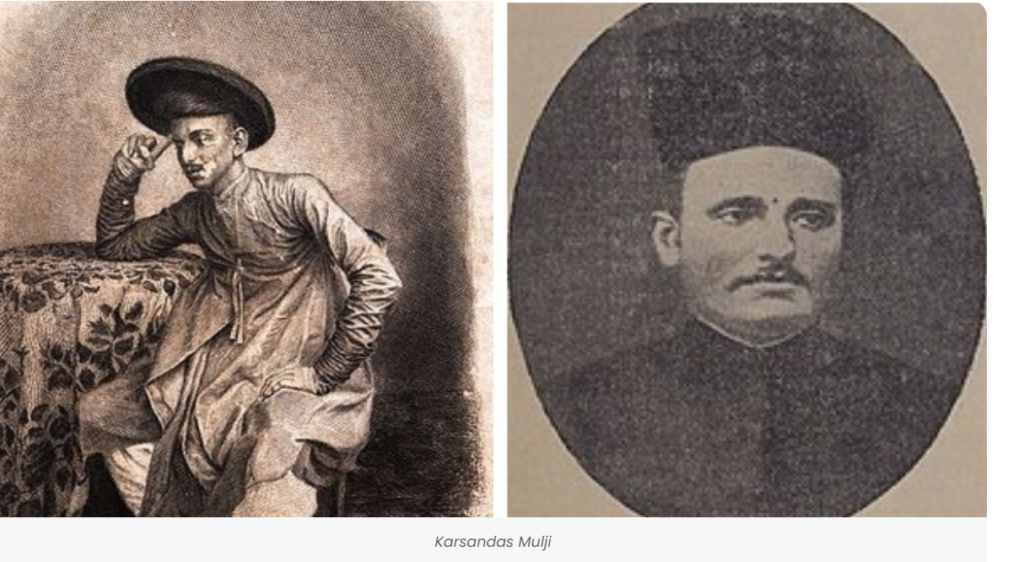
The year was 1862. A high-tension courtroom in Bombay was packed with spectators, all eager to witness the legal battle that would pit a fearless journalist against a powerful religious leader. The case, known as the Maharaj Libel Case, would become one of the most sensational trials in India’s history. The journalist, Karsandas Mulji, sought to expose the alleged sexual misconduct of religious figure Jadunathji Brijratanji Maharaj, igniting a scandal that rocked Indian society. This gripping story is now set to be revived in filmmaker Siddharth P Malhotra’s upcoming Netflix period drama Maharaj, starring Junaid Khan, Jaideep Ahlawat, Sharvari Wagh, and Shalini Pandey.
Karsandas Mulji: The Brave Journalist Who Challenged Tradition
Born in Mumbai in 1832, Karsandas Mulji came from the Kapol caste, a trading community in western India. From an early age, he was dedicated to public service and social reform, even facing personal sacrifices along the way. In 1851, when he penned an essay advocating widow remarriage, his progressive views led to him being disowned by his aunt. But Karsandas was undeterred. Determined to challenge societal evils, he launched the Gujarati weekly Satyaprakash in 1855, a magazine that fearlessly confronted outdated traditions, particularly in his own community.
The Rise of Pushtimarg and the Allegations Against Maharaj
The Pushtimarg sect, founded in the 16th century by Vallabhacharya, was a major Hindu devotional movement in western India. By the 19th century, its leaders, the Maharajs, wielded considerable influence and wealth, supported by devoted followers. However, whispers of corruption and sexual misconduct among these religious figures began to surface, and Karsandas was among the first to publicly question their morality.
In 1861, Karsandas published a bold article, Hinduono Asal Dharma ane Haalna Pakhandi Mato (“The Primitive Religion of the Hindus and the Present Heterodox Opinions”). The article directly accused Maharaj Jadunathji of exploiting his female devotees, a charge that shook the very foundations of the Pushtimarg sect. Furious at the accusations, Maharaj filed a libel lawsuit against Karsandas, demanding a staggering ₹50,000 in damages.
The Trial of the Century
The trial that followed was nothing short of a spectacle. Presided over by Chief Justice Mathew Sausse and Judge Joseph Arnould, the case attracted immense public attention. Thousands gathered to witness the courtroom drama unfold, while the press closely followed every detail.
The courtroom was packed with witnesses, including women who bravely testified to the sexual exploitation they had endured at the hands of Maharaj. Testimonies from doctors, including the respected scholar Bhau Daji, revealed that Maharaj had been treated for syphilis, further substantiating the allegations against him.
As the trial progressed, Karsandas faced immense pressure from within his own community, with the threat of excommunication looming over him. Nevertheless, he stood firm in his convictions, supported by a growing chorus of reformists who saw his battle as part of a larger movement to rid Indian society of corruption and hypocrisy.
A Historic Verdict
On April 22, 1862, the Bombay High Court delivered its landmark verdict in favor of Karsandas Mulji. Judge Joseph Arnould’s ruling became famous for its moral clarity: “It is not a question of theology that has been before us! It is a question of morality. The principle for which the defendant and his witnesses have been contending is simply this: That what is morally wrong cannot be theologically right.”
Karsandas was awarded ₹11,500 in compensation, though the legal battle had cost him much more. The case was a watershed moment for freedom of the press and social reform in colonial India, as it upheld the right of journalists to expose wrongdoing, even in the face of powerful religious institutions.
A Legacy of Courage and Reform
Karsandas Mulji’s courage in the Maharaj Libel Case cemented his place in history as a fearless journalist and social reformer. He continued to challenge orthodoxy until his untimely death in 1871. His work remains an enduring reminder of the power of truth and the press in bringing about societal change.
Now, with Maharaj bringing this historical drama to modern audiences, the story of Karsandas Mulji and his battle against the might of the Pushtimarg sect will once again come to life, offering a compelling narrative of morality, justice, and the fight against oppression in 19th-century India.

